
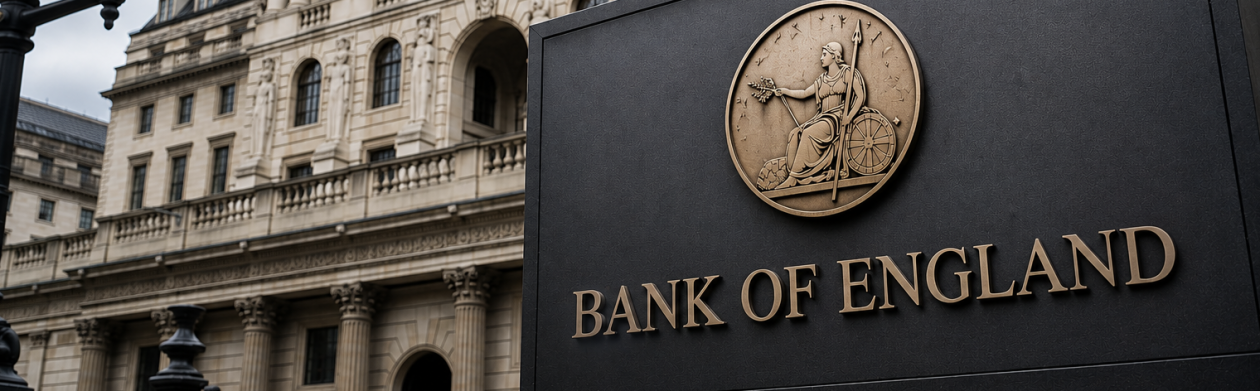
The Bank of England is widely expected to keep the Bank Rate at 3.75% when the Monetary Policy Committee (MPC) meets on Thursday 30 July.
Recent inflation data has strengthened the case for holding rates steady, with CPI falling to 2.6% in June, its lowest level in 15 months. Lower food and fuel price inflation have helped bring inflation closer to the Bank’s 2% target.
However, policymakers remain cautious. Rising oil prices, driven by renewed conflict in the Middle East and disruption to shipping routes in the Red Sea, are increasing concerns that inflation could accelerate again later this year. The Bank has previously forecast inflation could rise back to around 3.25%.
Markets are expected to focus not only on the interest rate decision but also on the Bank’s updated economic forecasts and Governor Andrew Bailey’s comments, which may provide further guidance on the outlook for inflation and future interest rates.
Adding to the uncertainty, Chief Economist Huw Pill has suggested that interest rates may need to increase over the next year if inflation proves more persistent than expected. Pill was one of two MPC members who voted for a rate rise at the last meeting, while the remaining seven members supported keeping rates unchanged.
What it means for the property market
For buyers, homeowners and landlords, a decision to leave rates unchanged would provide continued stability in mortgage pricing. However, expectations of imminent rate cuts have faded, and if inflation remains stubborn or energy prices continue to rise, borrowing costs could remain elevated for longer—or even increase again.
For landlords, this reinforces the importance of ensuring rental income continues to cover higher financing costs, while tenants may continue to face affordability pressures if mortgage rates remain at current levels.
